My five year old son would rather draw poo than write it. He mixes up his pronouns, puts his shoes on the wrong way round and comes out with charmingly preposterous assertions. (Why can’t we buy a balcony? Megalodons do exist). At the moment, he can spell his first name and read a smattering of three letter phonetic words, if pressed and incentivised by chocolate.
In approximately a year’s time, he will be asked by his teacher to read 40 words. 20 actual words and 20 non words. Non words like Bulm or Yewn or Foid. Lewis Carroll type words. (I like to picture the Government bureaucrat tasked with concocting these non words, leafing through the Jabberwocky for inspiration).
If my son gets fewer than 32 correct, he will fail. A cross will be marked, hopefully discreetly, in a document of some kind. He will be expected to re-sit the test the following year, and so on until he passes. But he won’t know it’s a test.
Or so we’re told.
It’s a false dichotomy, the pass and the fail. Just a means to aid assessment, they say. Nothing to worry about. But all the same, it might be an idea to up the level of support we’re providing at home, to compensate. Just a few minutes a day. Without passing on our concern. Because there’s nothing to worry about, really. The pass or the fail.
It all makes for a queasy mix.
As a parent it can be a hard act keeping a sense of perspective as our tricksy little grammatically unreconstructed darlings are put through their paces. My son learnt the meaning of the term ‘digraph’, before me. I don’t remember being taught grammar at school. Certainly not at the age of 4. As the kindly woman leading the Phonics course that the school facilitates, put it, in response to my anxieties: ‘he’s just a baby’. A baby learning grammar. And in today’s educational rat race, it’s never too early for a split digraph.
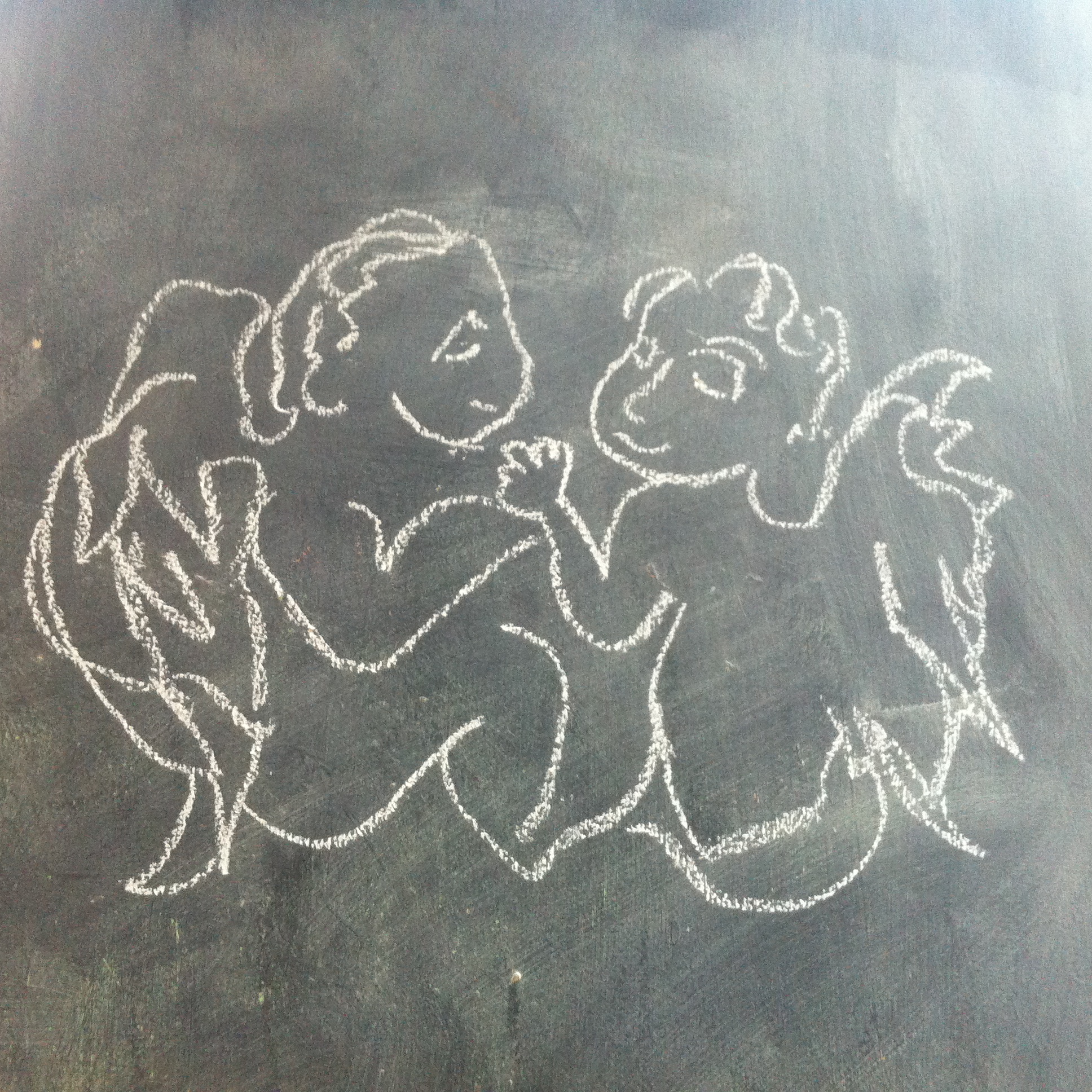
 Ariadne Birnberg